Where Art Transforms Souls: 25 Years of the Reiland Fine Arts Center
A Story of Vision, Sacrifice, and the Magic That Happens When the Lights Go Down
The lights dim. An expectant hush falls over the audience. In the orchestra pit below, musicians raise their instruments. On stage, performers take their positions, hearts racing. And in that electric moment before the first note sounds, something sacred happens—a community holds its breath together, ready to be transported.
For me, that moment came in a basement theater in Paris in the 1990s. I was a small-town girl who had never seen a professional production outside my high school auditorium. Then the opening notes of West Side Story filled that intimate space, and I understood—truly understood—what art could do to the human soul.
The music, the movement, the raw emotion of Tony and Maria’s impossible love transported me somewhere I’d never been. I left that theater transformed, carrying a memory that would shape everything that came after.
Twenty-five years ago, Rose Mary Reiland gave the University of Jamestown a similar gift: the chance for countless students and community members to experience that same transformative power of live performance.
A HOLE IN THE HEART OF A COMMUNITY
To understand the Reiland Fine Arts Center, you have to understand what came before and what was lost.
For decades, Jamestown’s old Opera House downtown served as a cultural beacon. Located on the rail line between Minneapolis and the West Coast, the venue was a vital stop for touring companies. Throughout the 1920s and 30s—and continuing well into the 1960s—vaudeville shows, opera performances, and theatrical productions would stop in Jamestown. The college performed its annual musicals there, and the building became woven into the community’s identity. In its final years, it served as a movie theater until urban renewal swept it away.
”When that Opera House was torn down, it literally ripped out the souls of many of the people who loved it in Jamestown,” recalls Dr. Robert Badal, who served as University President from 2002-2018.
Rose Mary Reiland felt that loss deeply. A local piano teacher who charged just $1 per lesson well into her later years, Rose Mary understood the arts as essential nourishment for a community’s soul and wanted everyone to have access to the fine arts.
”That was her mission,” Badal explains, ”to make that pain go away. And the building was the way to do that.”
FROM CHAPEL TO CENTER STAGE
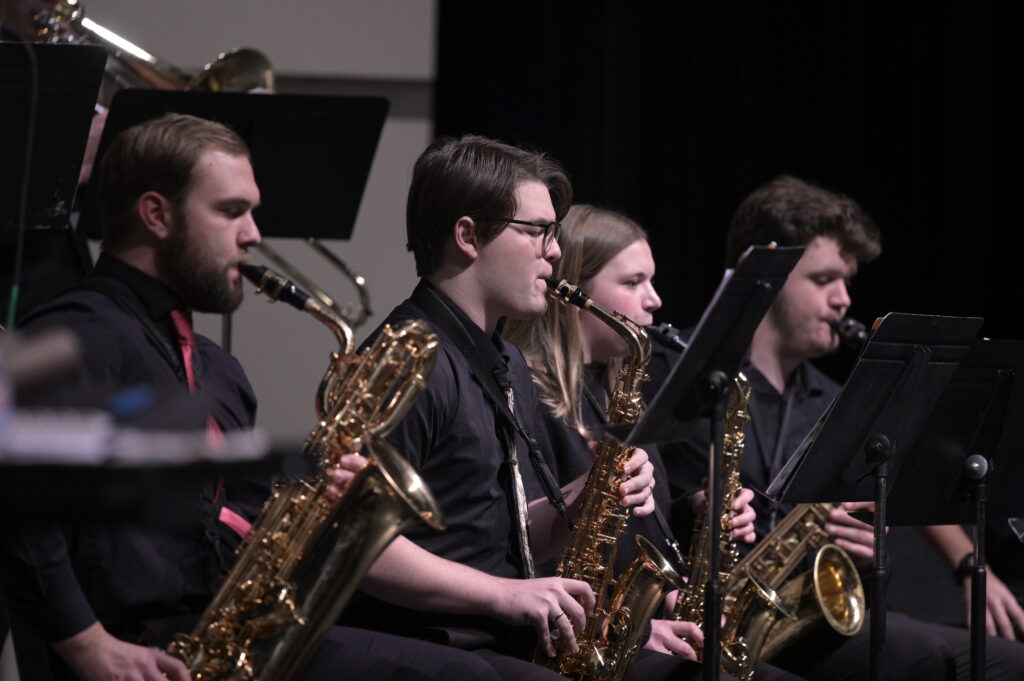
Before the Reiland opened, both music and theatre departments operated in spaces requiring creativity and compromise. Dr. Richard Walentine, director of music and professor at UJ arrived in 2000 and remembers, ”We had a work-study student whose sole job was to take down choir risers after choir rehearsal and put up all the chairs for band rehearsal in the chapel.”
”I remember my first year in the chapel, we had a tuba student, and whenever the tuba student would practice in the practice room, that was the only thing happening in the whole department,” Walentine recalls with a laugh.
When the community arts series at the old high school auditorium dissolved due to financial concerns, Dr. Badal made a public commitment: ”The college is going to try to do something of some level of significance beyond our normal departmental programs.”
That philosophy—that the college is a cultural resource for the community—drove countless decisions during his tenure and still does today.
BUILDING MORE THAN WALLS
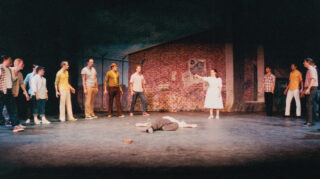
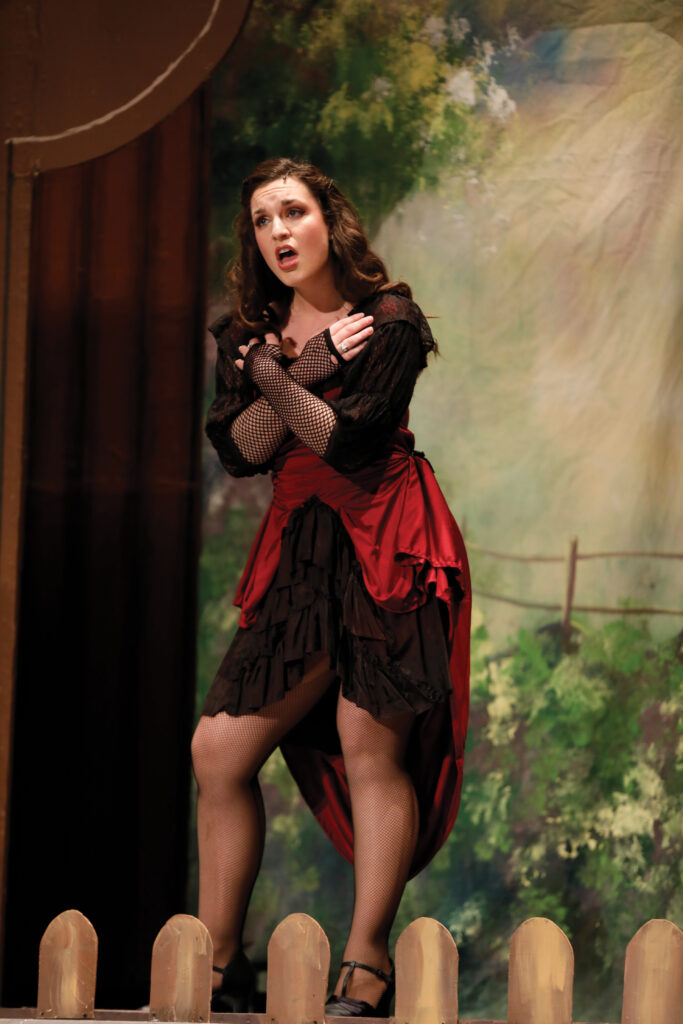
Michael McIntyre, director of theatre and associate professor of performing arts, knew the first production had to be special. ”I knew we needed a play that showcases the ideal fusion of multiple arts—drama, music, dance, and design,” he says. ”In American musical theatre, no work represents that better than West Side Story.”
The choice was ambitious: a big cast, a large orchestra, several flying and rolling sets. But as opening night approached in fall 2001, the entire building wasn’t finished. ”Focus was placed on having the east side of the building ready, but the auditorium and theatre department spaces would be delayed,” McIntyre recalls.
Undeterred, McIntyre and his students built every set in the Little Theatre across campus, then dismantled each piece to fit through the single side door. ”With only one week to go before opening night, we moved in all of that scenery to reassemble it as contractors were still finishing up the new stage,” he explains. ”Vital parts of the stage’s permanent rigging didn’t arrive until the day of performance, so the last few hours before showtime were even more hectic than normal.”
That night—November 2001, as the nation reeled from 9/11—the orchestra swelled and Tony and Maria danced across that brand-new stage. A building became a home for dreams.
 WHERE COMMUNITY AND COLLEGE MEET
As the theatre found its footing, it became clear this wasn’t just a college project; it was a community effort, with local supporters helping shape its identity from the very beginning.
One of the most ambitious moves was bringing the Guthrie Theater, one of the nation’s most respected regional theatres, to Jamestown. Kelly (Honnold) Krein ’64 made it happen. The 2002 production of Ah, Wilderness! wasn’t just a performance; it was a three-day residency with workshops for theatre students. People came from all around the state. ”It put us on the arts map,” Badal recalls.
When the Reiland needed a quality grand piano, two community members stepped forward. ”That’s just the way these folks are,” Badal notes. ”They didn’t even want their names mentioned.”
Another local family brought two chairs saved from the old Opera House to display in the Reiland lobby which is a tangible connection to the building’s mission and history.
In those early years, Reiland also hosted televised Christmas concerts produced by Fargo’s public television, giving the building recognition in the broader music community.
THE ANNUAL MIRACLE
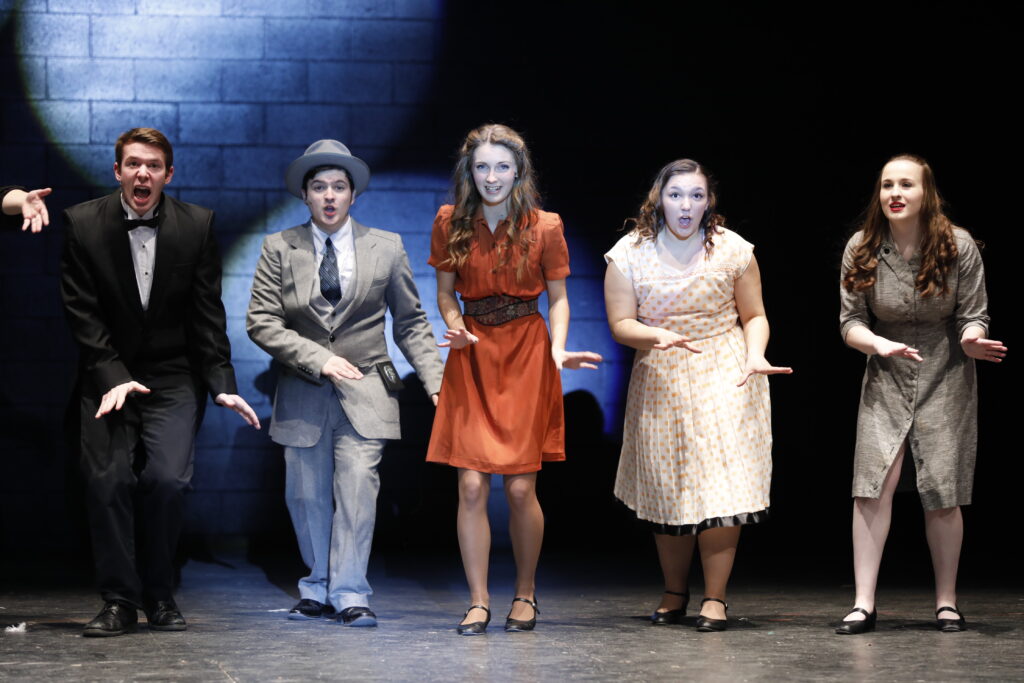
When the musicals come together each year, the numbers of people who participate are staggering. For 2001 production of West Side Story, there were 44 cast members and 18 orchestra members. ”That means maybe 15% of all the students on campus are involved,” Badal observes. ”That’s pretty amazing when you really think about it.” And those numbers don’t include the many additional students building sets, working crews, running lights and sound.
The orchestra typically splits between students and community members, often including campus faculty and staff. Bruce Rau, a farmer, drives in from Medina every fall to perform. Alumni from Bismarck return year after year at their own expense. “They’re not in it for glory,” Walentine reflects. ”They’re in it for the pure joy of making music together.”
MORE THAN MEMORY: A LIVING LEGACY
What makes a building special isn’t the bricks or the acoustics or even the state-of-the-art lighting system. It’s the memories created there the first time a student steps on stage, the moment an orchestra and cast finally click, the collective gasp from an audience when a scene lands perfectly.
”Whether it was the Little Theatre or other spaces, when you stage a play basically at any level, the kind of thing that happens in the production of the play, and the memories people take from it can make any place special,” McIntyre observes thoughtfully. Even old, small spaces that seem past their prime ”still become a place of affection for anybody.”
Sharon Cox, former art professor at UJ, witnessed this in the transition from the old chapel basement—where she and art student Billy McKellip once spent weekends trying to lure their ”friendly ghost” to the new building, walking between the two buildings while Mozart played, carrying paintings and sculptures. When 9/11 happened during the move, priorities shifted dramatically. The art students created paintings and panels in support of the country, hanging them on clotheslines on Allen Field during homecoming.
”Those were tough times for everyone,” Cox recalls simply.
But art has a way of helping us through the tough times. Theater gives us space to process grief, music lifts our spirits, and visual art helps us see the world differently.
 BUILDING THE PROGRAM
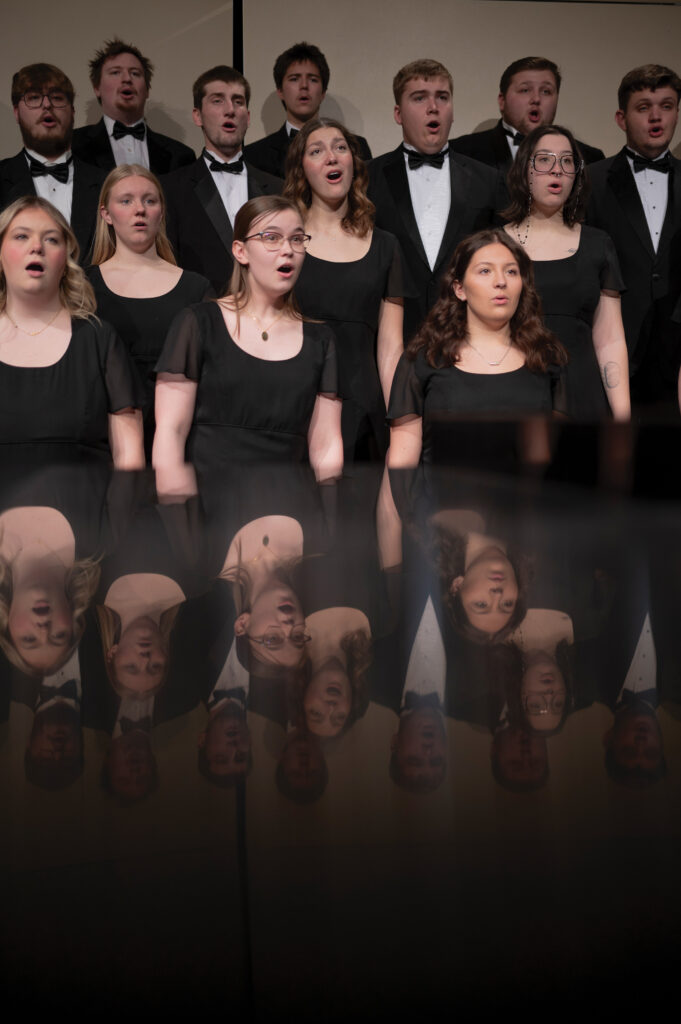
Dr. Anne Gassmann, associate professor of music and director of choirs, has been connected to the Reiland since high school. She first came to campus as a student competing in a state music contest.
John Clodfelter, assistant professor of music, ”plays for literally everything,” Walentine notes. Ken Aune, instructor of music and director of bands, has transformed the instrumental program. “For years, UJ was known as a choir school. Now our instrumental ensembles are the equal of our choral ensembles.”
THE JIMMIE WAY
”Jimmies are students who understand community,” Walentine explains. ”At homecoming, we have 30, 40, sometimes 60 alumni come back to sing with us and people from the classes of the 60s and 70s still return every year, bringing their kids and grandkids together.”
McIntyre adds, ”Our students aren’t those with tunnel vision. We draw students interested in well-rounded experiences.” Athletes perform in musicals. Music majors appear in plays. ”Many of them come from small schools where they’ve had those opportunities,” Walentine notes. ”Here we give them the chance to continue that on a much grander scale.”
LilyAnna Miller, a music education major, embodies this spirit: ”As a music education major, the Reiland is where I spend most of my days. It’s also where I have a lot of my favorite memories. From our late-night string techniques class to waiting for each other after exams to early morning bus rides for our run-outs, these are the memories that I’ll remember long after I graduate. It also brought me some of my best friends. I’ll never forget the day I decided I wanted to change my major to music education. It was right before wind ensemble, and I was sitting on the couches with some of my friends. Hearing them talk about their experiences made me realize that I wanted that in my future.”
THE FEELING THAT NEVER FADES
There’s something that happens when you walk into a theater just before a performance begins. The air feels charged with possibility. The house lights dim. And for the next two hours, you and hundreds of strangers will breathe together, laugh together, maybe cry together. You’ll watch actors pour their hearts into characters, musicians create sonic landscapes, crew members execute split-second set changes. You’ll witness dozens of people, students juggling classes and rehearsals, faculty directing and performing, community members driving across town after work, creating something that exists only in this moment, for this audience.
That’s what Rose Mary Reiland understood when she made her gift. That’s what draws Michael McIntyre back for his 30-year journey. That’s what brought Richard Walentine to UJ 25 years ago. That’s what motivated Dr. Badal to champion the arts as a bridge between college and community. And that’s what LilyAnna Miller discovered sitting on those couches before wind ensemble, surrounded by friends who helped her find her calling.
The Reiland Fine Arts Center stands today not just as a building, but as a testament to vision, sacrifice, and the enduring power of human creativity. For 25 years, it has been a place where students discover their voices, where community members experience the transcendent, where the ordinary becomes extraordinary when the lights go down and the music begins.
That magic continues today, in every rehearsal, every performance, every moment when someone experiences live theater or music and walks away transformed, carrying a memory that will shape everything that comes after.
To learn more about upcoming performances at the Reiland Fine Arts Center or to support the performing arts at the University of Jamestown, visit UJ.edu/performing-arts