The Business of Belonging
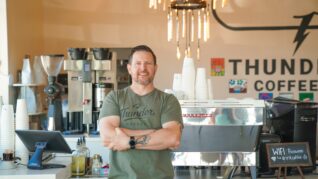
Skyler Dutton ’04 set out to make exceptional coffee. What he built was something even bigger.
My 8-year-old son, Leo, walks up to the counter at Thunder Coffee ready to order his usual: a not-too-hot cup of hot chocolate.
A few moments later, the bubbly barista hands him a mug with delicate latte art floating on top—a small detail, but one most coffee shops save for espresso drinks. When it’s my turn, she doesn’t assume I already know the language of specialty coffee. Instead, she asks what I typically enjoy, patiently explains the menu and offers a recommendation based on my answer.

It all feels effortless. Spend an hour with Thunder Coffee founder and University of Jamestown alumnus Skyler Dutton ’04, and you’ll quickly learn it isn’t.
“The relationship matters more than the transaction,” Dutton says.
It’s an idea that comes up more than once during our conversation—and one that seems to guide nearly every decision the Montana native turned North Dakota entrepreneur makes.
Like the business he would eventually build, Dutton’s own path wasn’t linear.
Growing up in northeastern Montana, he chose the University of Jamestown because it felt like a place where relationships mattered. He arrived planning to study sports medicine, changed his major “more than once,” and eventually earned a degree in criminal justice.
“I found out that it was okay to try new things,” he says—foreshadowing his professional journey. “You can switch a major. You can quit the football team and join choir. You can work full time outside of school. You can do all these different things.”
He also remembers the professors who worked with him as he balanced work, classes and interviews for law enforcement positions. Looking back, Dutton doesn’t talk about the flexibility they offered as much as the relationships they built.
“The relationship matters more than the transaction,” he says again, this time describing his experience at Jamestown. “Whether it was Dr. Stone saying, ‘You’re kind of late in the game to change your major, but here’s how we’re going to make it happen,’ or professors recognizing I had worked all night before coming to class, they gave me a lot of grace.”
His career took several turns over the next decade. He worked as a police officer, entered North Dakota’s oil industry and later traveled the country as a safety consultant, teaching leadership, communication and workplace culture.
To an outsider, those careers may not seem connected, but Dutton knows better.
“Every role,” he says, “centered on helping people. Coffee just happened to become the next opportunity to do that.”
In 2016, Dutton learned a classic cup of joe doesn’t need to be sub par when he had his first taste of specialty coffee.
“I’d never had a cup of coffee that I enjoyed. Coffee, to me, was something that with enough creamer—or maybe a hot cocoa packet—it was tolerable.”
Specialty coffee was different. “It was delicious,” he laughs.
That first cup quickly became a hobby. He bought home brewing equipment, ordered beans from specialty roasters and found himself searching for great coffee around Fargo. At the time, though, there were only a handful of shops serving specialty coffee and none were convenient to where he worked in West Fargo.
Then another frustration emerged.
“You could either get great coffee or great customer service,” he says. “We thought, why can’t you have both?”
That question would eventually become Thunder Coffee.
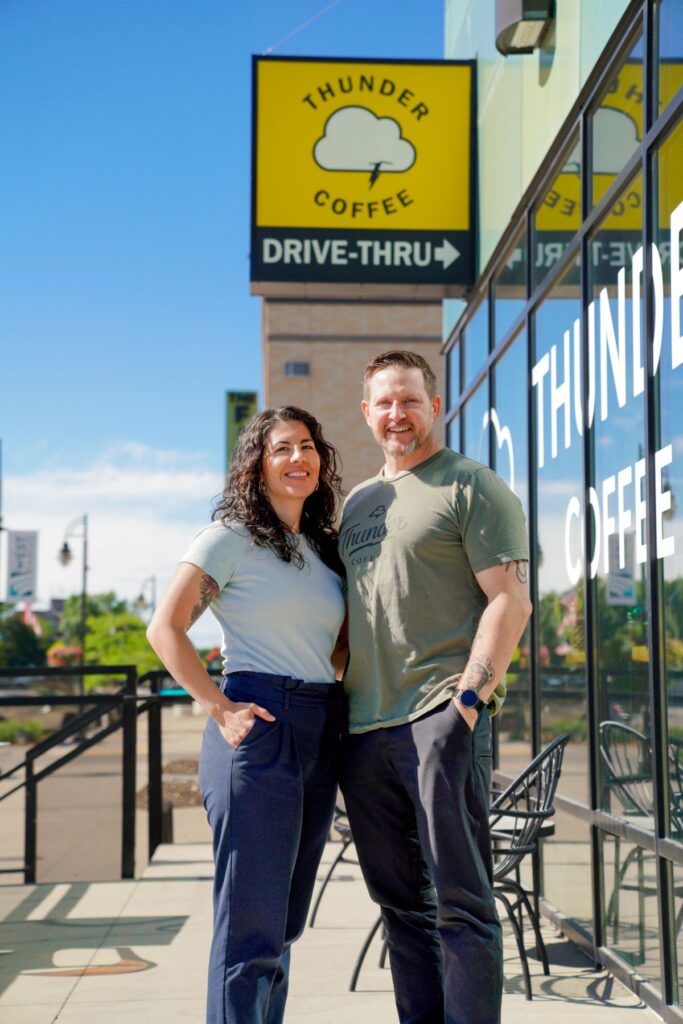
In 2017, Skyler and his wife Nicole launched their business with a mobile coffee cart, taking it to farmers markets, community events, fitness competitions and pop-up gatherings across the Fargo area.
“The cart was pretty low risk,” Dutton says, explaining that both he and Nicole still had full-time jobs outside of crafting exceptional coffee. “It was a great way to beta test. Is this a thing that anybody wants? Is it something people will pay for? Can we build a following?”
The answers didn’t come overnight. In fact, Dutton laughs remembering the early days, when they struggled to give away free samples. But each event brought another opportunity to learn. They adjusted recipes, refined their service and slowly built a loyal following.
“There are so many things about entrepreneurship that you don’t know,” he says reflecting on his journey in this business. “And you don’t know what you don’t know. Ask questions. Find mentors. Start before everything feels perfect.”
Before long, coffee had taken over the Dutton home. One room became “the coffee room,” and equipment spilled into the garage. Opening Thunder Coffee’s café in West Fargo in 2019 wasn’t part of some grand expansion plan.
“You very much live with your commitment when you’re just starting out,” he explains, laughing as if lost in the memory of those early days. “I’ve got my life back now. I don’t have to step over coffee equipment.”
“The coffee mattered, but so did the experience,” Dutton continues. Thunder hired people who genuinely enjoyed serving others and taught them coffee. Customers weren’t expected to know the difference between roast profiles or brewing methods before walking through the door. They were welcomed first.
Spend time in the café and you’ll notice that Skyler rarely says “I.” He replaces that lonely little letter with a much bigger word: “we.” Sometimes he’s talking about Nicole. Sometimes he means his employees. Often, he’s talking about the community that has grown alongside the business.
“Our reputation for community involvement is what I like to talk about. It’s pretty common for businesses to say they’re community focused. What does that even mean?” Dutton questions. The Fargo coffee powerhouse partners with local nonprofits and schools, hosts fundraisers and has built a reputation for showing up whenever the community needs it.
“When an elementary school’s food pantry is running low and they need to run a food drive, they call us—a local coffee shop. How cool is that?”
Skyler’s community-first perspective became especially important in 2020. When the pandemic forced coffee shops to rethink everything, Thunder created plans to begin roasting its own coffee beans. If people couldn’t come to the café, the café would find a way to come to them.
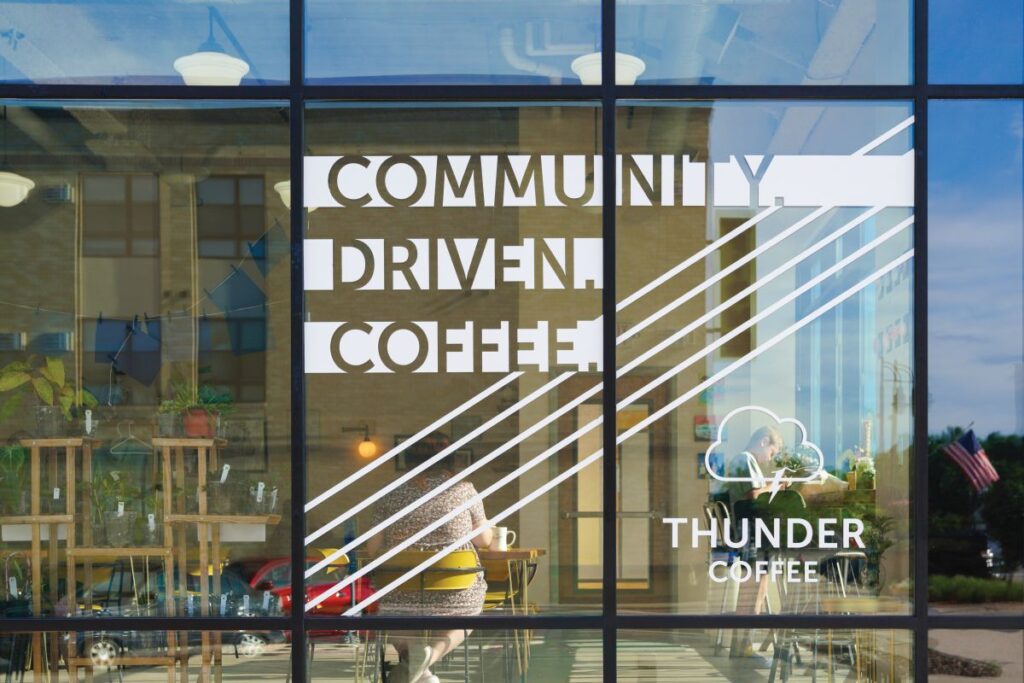
The years that followed brought steady growth. In 2023, Thunder expanded into Brewhalla, Fargo’s popular food hall and marketplace. Thunder Coffee even earned national recognition, including being named one of USA Today’s 10 Best Independent Coffee Shops.
Those accomplishments matter. They just aren’t what Dutton really focuses on.
Instead, the humble leader talks more about people than progress. He speaks candidly about employees he lost because his communication style didn’t always match his intentions.
“I can be the problem,” he says. “Real leadership boiled down to communication. Can you get people to understand what you’re trying to do? Can you get them to buy into the mission?”
Their mission now belongs to the entire Thunder team. Employees create seasonal drinks, design coffee bags and bring new ideas to the table. Dutton is quick to point out that many of the things customers love most didn’t come from him. He gives his team the opportunity to shine.
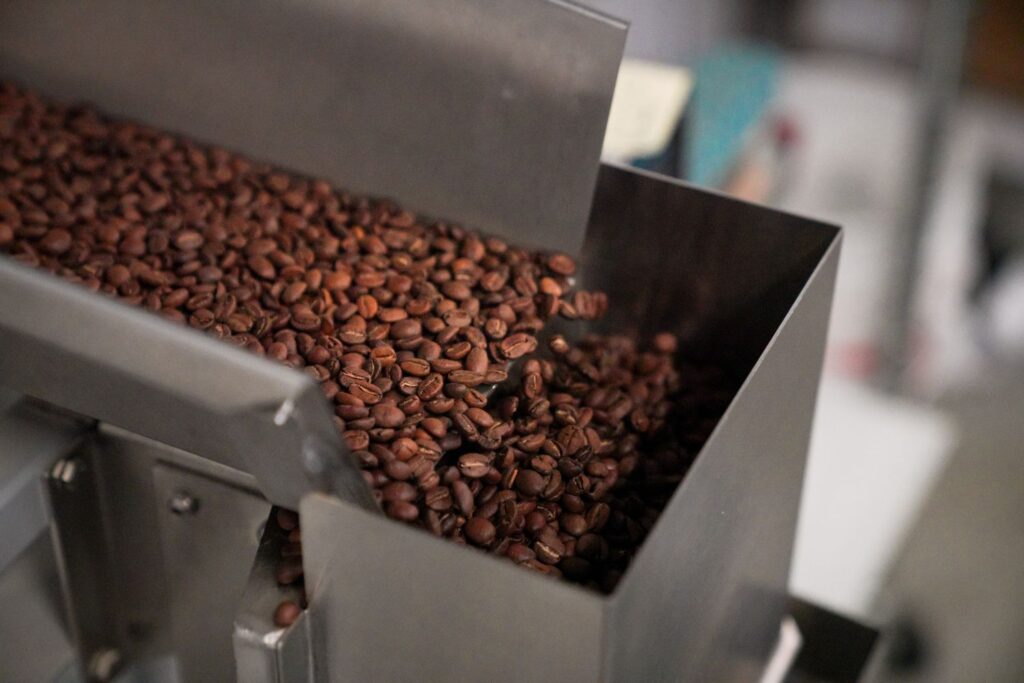
After our interview, Dutton asks if we’d like to see the roastery down the street. Another member of the Thunder team passionately walks us through the roasting process, explaining coffee origins, flavor profiles and why each coffee is selected.
The conversation feels less like a demonstration and more like someone sharing something they genuinely love. No one looks to Dutton before answering a question. They don’t need to. He trusts them. And the culture—well, that speaks for itself.
Late in our conversation, I ask Dutton how he measures success today.
“A while ago, I probably would have said money, or growth in terms of numbers,” he pauses just long enough to appreciate how much his answer has changed. “Success,” he says simply, “is being such a pillar in the community that people think of you when they need help.”
It’s an answer that reflects the kind of character and leadership the University of Jamestown hopes to instill in every graduate—qualities practiced not in a classroom, but one interaction at a time.
As I think back to that morning, I don’t remember the latte art nearly as much as I remember how it made us feel. Leo wasn’t treated differently because he ordered hot chocolate. I wasn’t expected to understand specialty coffee before asking questions.
Every interaction quietly communicated the same message: You’re welcome here.